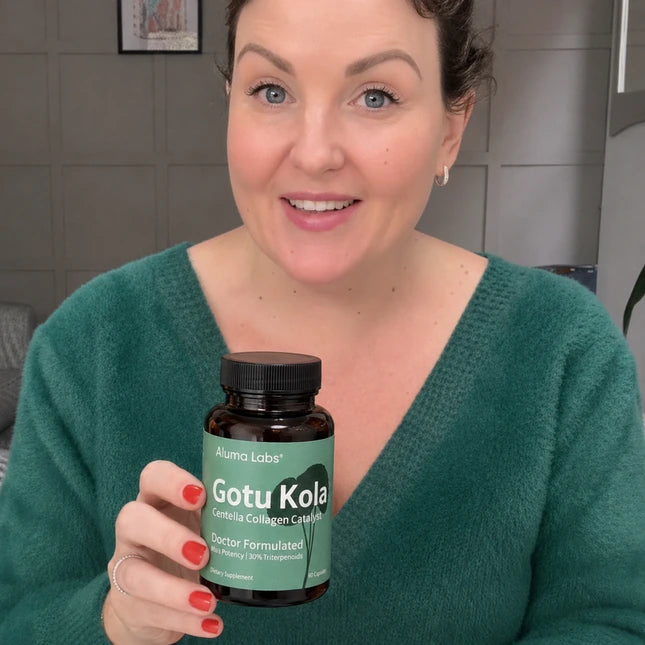
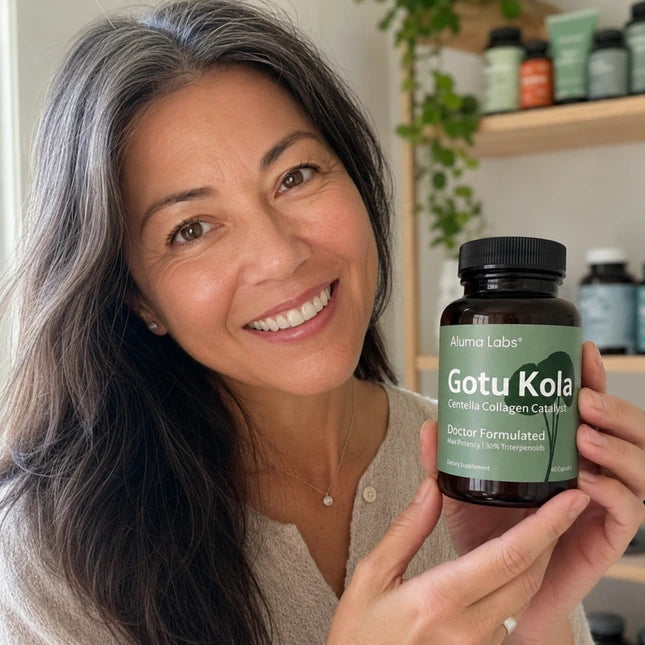
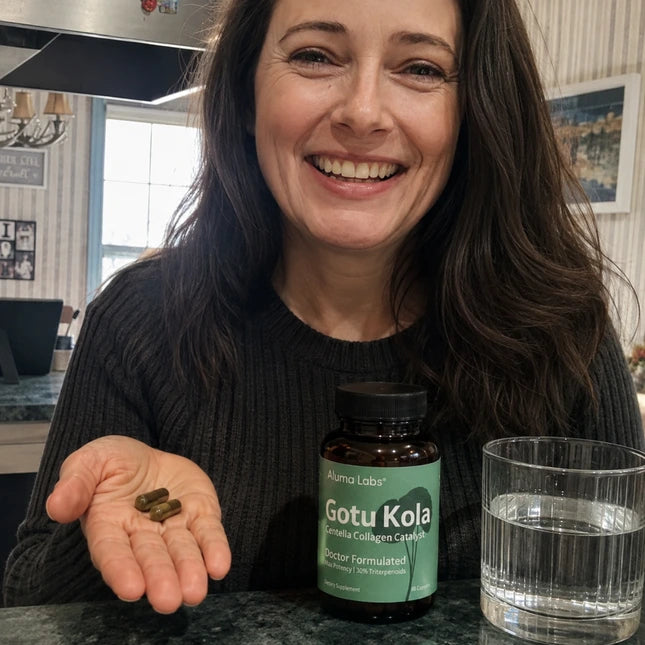
The Science Behind Gotu Kola
If you've swallowed collagen powder for years and seen nothing, layered serums that never got past the surface, abandoned gummies that turned out to be candy, or watched another "beauty from within" bottle expire in your cabinet — the problem isn't your skin. It's that nothing you've tried actually reached the layer where firmness is made.
Gotu kola is the rare exception: clinically researched and genuinely different.
The compounds in gotu kola — particularly asiaticoside and madecassoside (the triterpenoids that made centella famous in dermatology) — work with your skin, not on top of it. They signal your fibroblasts, the cells that manufacture collagen, to produce more of your own Type 1 collagen — supporting firmness, elasticity, and repair without forcing your body into anything unnatural.
Your skin needs:
 Asiaticoside — the signaling compound that tells fibroblasts to synthesize new collagen
- Madecassoside — calms inflammation and supports barrier repair while collagen rebuilds
- Asiatic & madecassic acid — support wound healing, skin strength, and tissue regeneration
- Triterpenoid synergy — the four actives work together, the way the clinical research uses them
These compounds are concentrated in gotu kola — but only when the extract is standardized from triterpenoid-rich leaves. Mass-market gotu kola is unstandardized whole-herb powder, ground stems and all, bottled for "memory support" at doses the skin research never used. Most "gotu kola" capsules on store shelves are essentially green dust from a skin standpoint.
Aluma Gotu Kola delivers a full 300mg standardized to 30% triterpenoids — the clinically targeted dose, every capsule, every batch, third-party verified.
Two capsules. Every morning. With breakfast.
When your fibroblasts get the signal they need, your skin remembers how to rebuild itself.
The texture smooths. The firmness returns. The mirror gets easier.

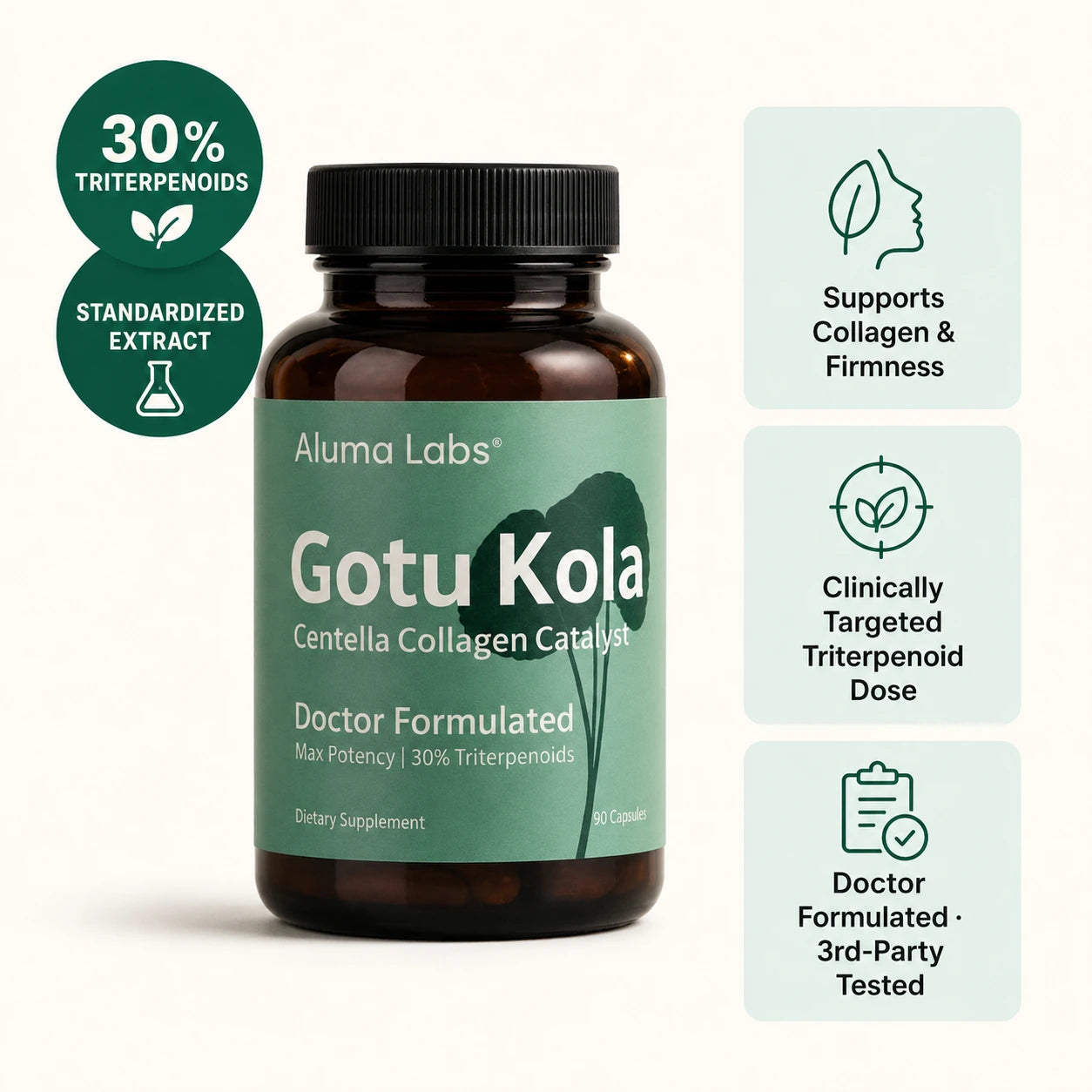



 Watch Out For Fairy-Dusted Formulas.


 Firmness & Collagen Production
 Firmness & Collagen Production
 Skin That Bounces Back
 Crepey Skin & Thin Texture
 Loose Skin After Weight Loss
 Scars, Marks & Post-Procedure Recovery
 The Menopause Collagen Cliff
 Calm Under Stress
 A Routine You'll Actually Keep